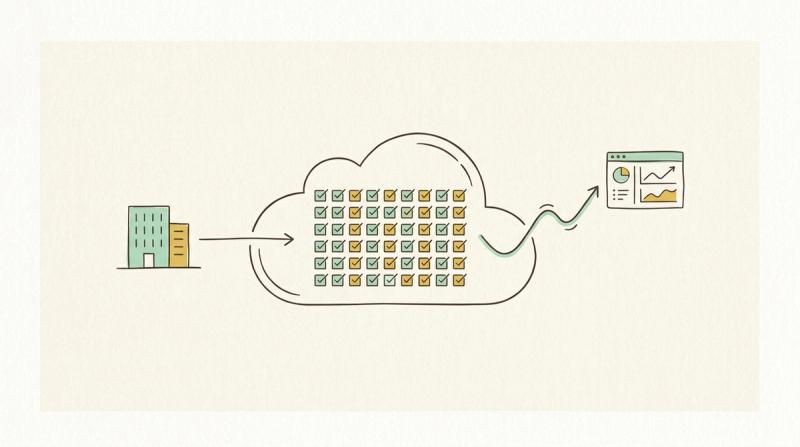
Delivery engineeringDelivery engineeringDelivery engineering is the discipline of building the road from commit to production: pipelines, build systems, artifact handling and release strategies such as feature flags and progressive delivery — often as a shared platform, so no team has to build its own.Read more in the glossary → is the discipline that turns software delivery into a strategic capability — not a last, stressful step before production. When the delivery flow is automated, measurable and repeatable, organisations can increase their rate of change without losing control. CI/CDCI/CDCI/CD stands for continuous integration and continuous delivery/deployment: automated flows where code is built, tested and delivered to production in small, frequent steps instead of big, risky releases.Read more in the glossary → is built on exactly this: automation that makes it possible to deliver software in shorter, safer iterations. Read more about CI/CD at Atlassian.
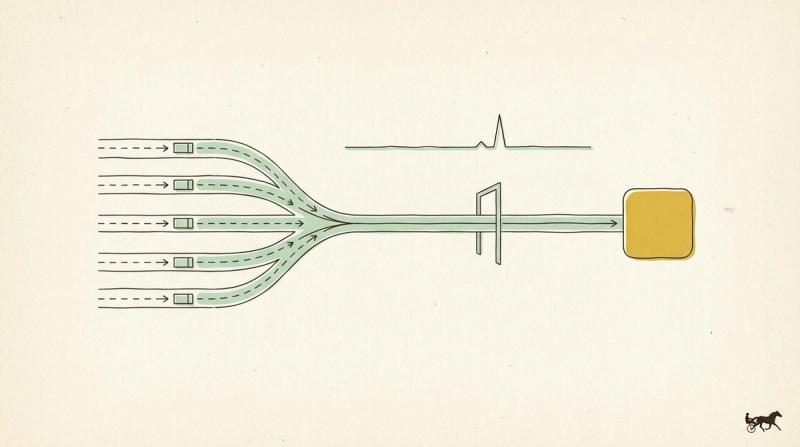
Robust CI/CD pipelines create a clear path from code to production. Tests, security checks, build steps and deployment become an integrated part of everyday development. That reduces manual errors, shortens lead timesLead timeLead time is the time from a change being finished in code to it running in production — one of the four DORA metrics. It measures how much waiting, manual handling and queueing sits between the developer and the customer, not how fast anyone codes.Read more in the glossary → and gives teams faster feedback on every change.
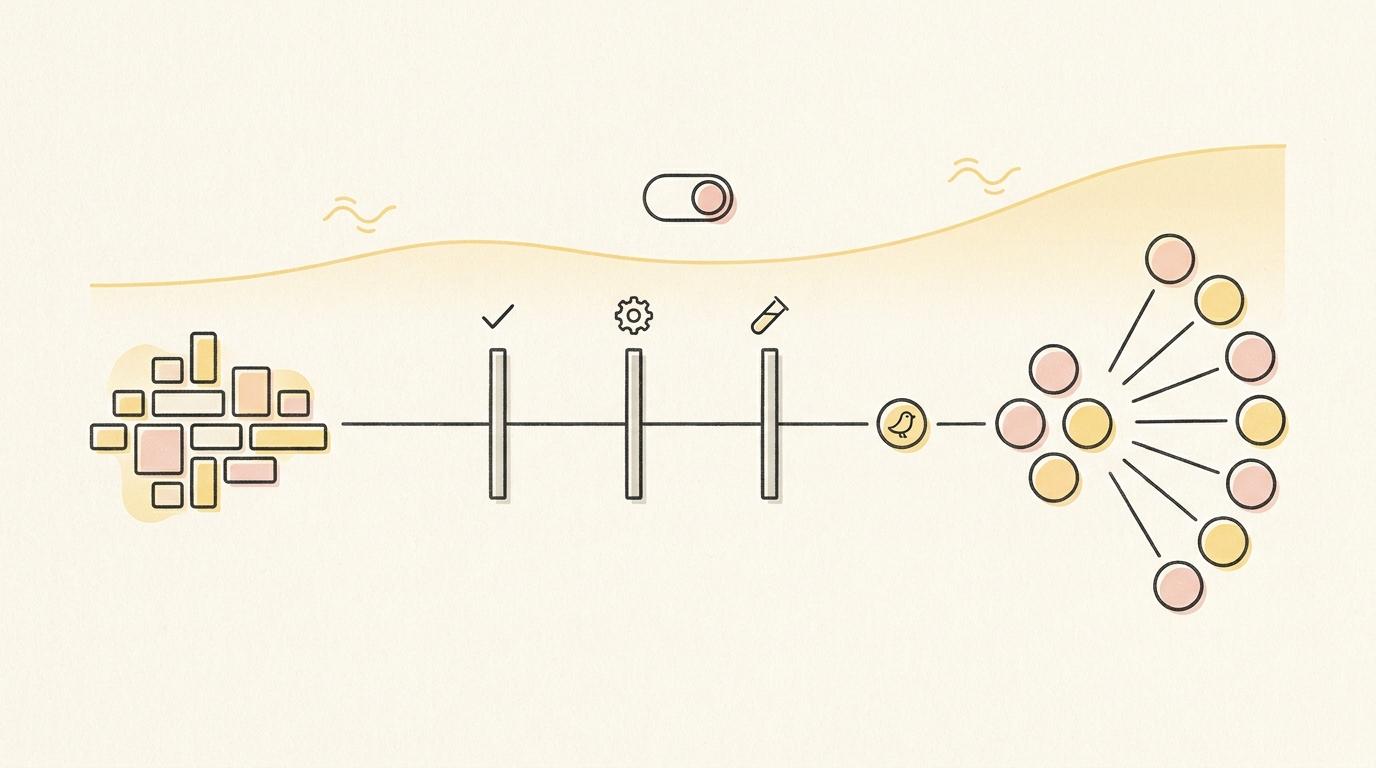
Feature flagsFeature flagsFeature flags (feature toggles) are switches in the code that let functionality be turned on and off without a new deploy — decoupling deployment from release and giving control over timing, audiences and risk.Read more in the glossary → make it possible to decouple deployment from release. New functionality can ship to production without being switched on for every user at once, giving teams better control over timing, audiences and risk. Martin Fowler describes feature toggles as a technique for changing system behaviour without changing code — central to modern release management. Read more about feature toggles at Martin Fowler.
Progressive deliveryProgressive deliveryProgressive delivery means changes are rolled out gradually — for example via canary releases or percentage-based rollouts — measured in production and scaled up only when the signals are right.Read more in the glossary → takes this one step further. Instead of big, risky releases, changes are rolled out gradually, measured in production and scaled up only when the signals are right. Red Hat describes progressive delivery as a controlled, gradual way of releasing application updates, where new versions are first exposed to a smaller group of users to reduce release risk. Read more about progressive delivery at Red Hat.
AI-assisted release safety strengthens the discipline further. By analysing changes, test results, history and production signals, risks can be identified earlier and release decisions become more data-driven. AI doesn't replace strong engineering principles — it amplifies them. DORA's research on AI-assisted software development stresses that AI has the greatest effect in organisations with well-functioning systems, practices and teams. Read more in the DORA Report.
The result is a delivery model that scales with both the technology and the business. Delivery engineering helps organisations go from monthly releases to multiple deploys a day — with higher quality, better traceability and more confidence in every release.