Paperphyte/Services/Product engineering

Product engineering

From first sketch to shipped product. We take ownership of design, code and delivery when you want a dedicated team that owns the outcome.

Product engineering

Good digital products aren't built by handing over a list of requirements and waiting for code. They're built with clear strategy, fast validation, strong design, senior engineering and a team that owns the outcome.

At Paperphyte we help companies go from idea to launched product through our product engineering offering. We take ownership of design, code and delivery when you need a dedicated team that doesn't just produce features, but drives the product forward.

At a time when AI, LLMs and automated development workflows are changing how products get built, companies need to think differently. Gartner describes AI-native software engineering, LLM-based applications and AI-driven automation as central strategic trends for software engineering in 2025 and beyond. The point is clear: tomorrow's product teams will be able to build, test and iterate faster — but only if the technology is connected to the right product strategy, architecture and ways of working. Read more at Gartner on strategic trends in software engineering.

Build the right product before you build too much

Build the right product before you build too much

The biggest risk in product development is rarely the technology. The biggest risk is building the wrong thing for too long.

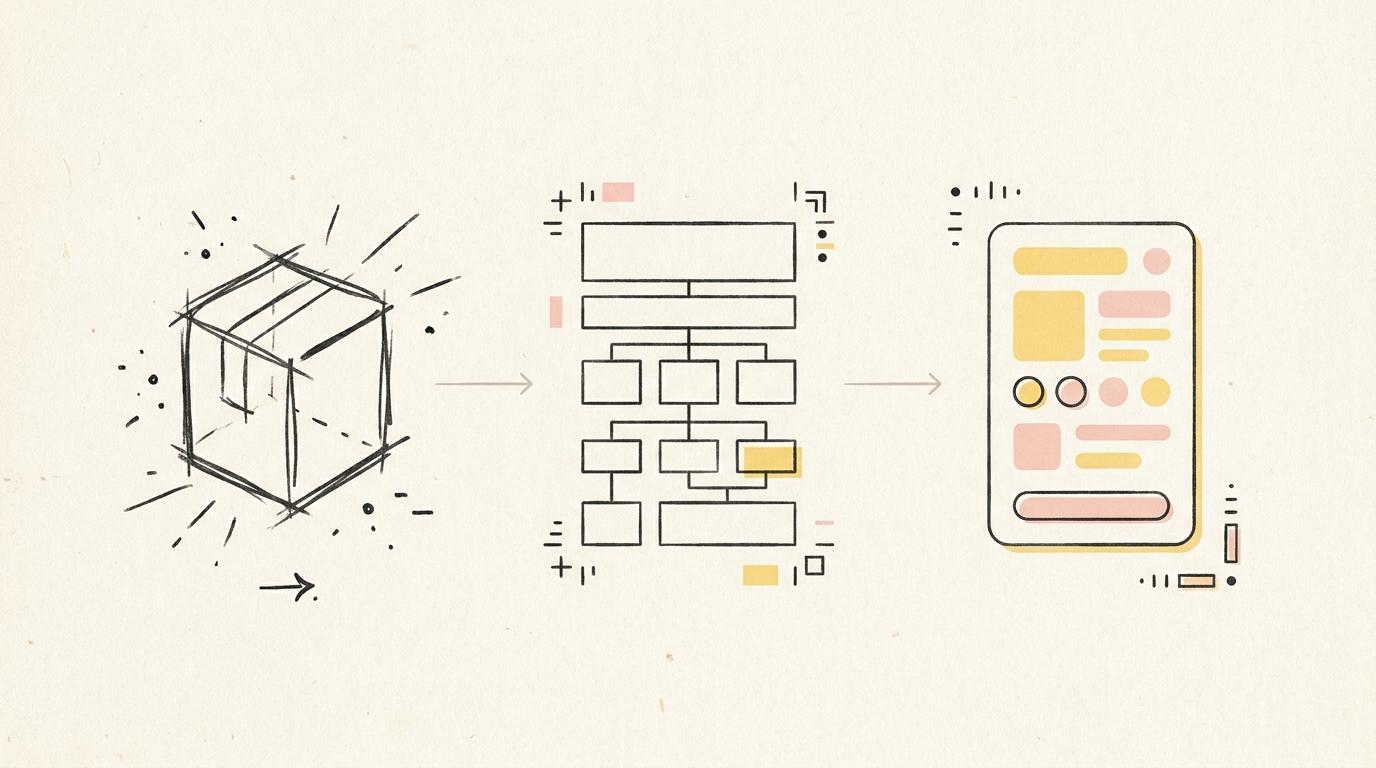
That's why we often start with discovery & prototyping. Together we make the idea concrete, identify users' most important needs, sketch the core flows and produce prototypes that can quickly be tested, discussed and improved.

Discovery is not just about design. It's about setting a strategic direction for the product:

  • What should the product prove first?
  • Which assumptions need to be tested early?
  • Which parts should be built manually, automated or AI-augmented?
  • Where can LLMs create real value?
  • What architecture does the product need to be able to grow?

The goal is to reduce risk before the big investment is made. You get a clear basis for decisions, a smarter MVP and a launch plan built on learning rather than guessing.

Iterate faster with LLMs and AI-driven development workflows

LLMs don't just change what products can do. They change how fast product teams can go from idea to working solution.

With the right way of working, AI can accelerate research, prototyping, requirements breakdown, code generation, testing, documentation and product iteration. Gartner highlights that AI-enabled tools are fundamentally changing how software is built and delivered, and that organisations need to use these trends to accelerate innovation and create future-proof engineering practices. Read more in Gartner's article on strategic software engineering trends.

For us that doesn't mean replacing the product team with AI. It means building a smarter team where people use AI to reach the right decisions and better implementation faster.

We help you use LLMs to:

  • quickly explore and compare product ideas
  • produce prototypes and technical proofs of concept
  • create faster development cycles
  • generate and improve code with human quality control
  • automate repetitive parts of development work
  • build AI features directly into the product
  • test, evaluate and improve the solution continuously

The result is a shorter path from hypothesis to user feedback — and better conditions for building the right product faster.

MCP servers: connect AI to your real systems

MCP servers: connect AI to your real systems

An LLM becomes far more valuable when it can work with the right context. That's why MCP servers and similar integration patterns matter in modern AI products.

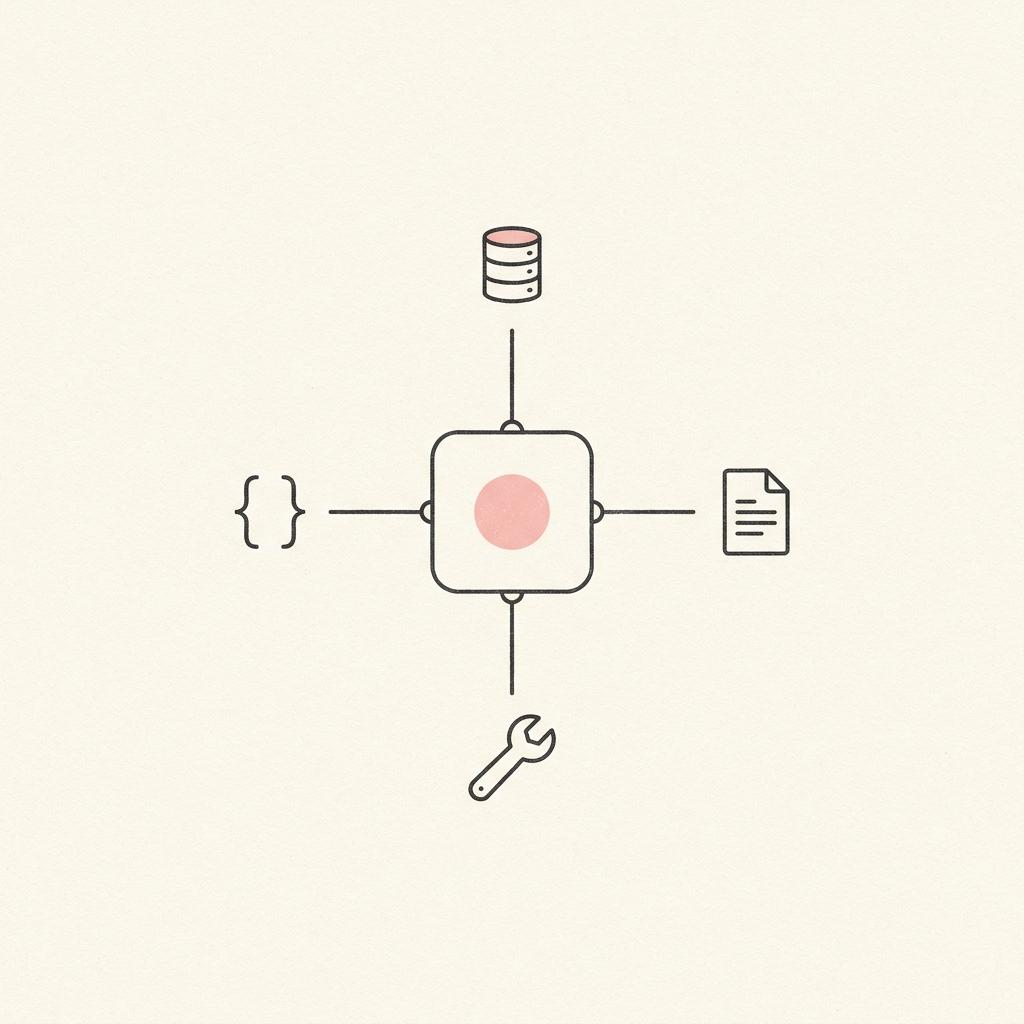
With MCP, the Model Context Protocol, AI assistants and agentic workflows can connect to tools, databases, documents, APIs and internal systems in a more structured way. That makes it possible to build AI features that don't just answer in general terms, but can actually act in the product's or organisation's real environment.

For example, letting an AI assistant:

  • search product data
  • summarise customer cases
  • draft reports
  • analyse internal documents
  • suggest the next step in a workflow
  • fetch information from business systems
  • trigger actions via APIs
  • support users directly inside the product

For companies serious about AI features, this is a strategic difference. Plugging in a chatbot isn't enough. The product needs an architecture where AI can use the right data, the right tools and the right guardrails.

One team for web, iOS and Android

Today's users expect fast, stable and intuitive experiences on every platform. That's why we build products for web, iOS and Android with the same care for user experience, architecture and long-term scalability.

We help you build, for example:

  • web applications and customer portals
  • apps for iOS and Android
  • internal tools and operational systems
  • backends, APIs and integrations
  • AI-driven product features
  • LLM-based workflows
  • MCP servers and integrations with internal systems

We don't just build interfaces. We build product platforms that can grow, change and evolve over time.

Launch incrementally and learn faster

A successful launch is not one big moment. It's a controlled process where the product gradually meets real users, real data and real business needs.

With incremental launches we help you go from prototype to pilot, beta and public release in clear steps. That reduces risk, speeds up feedback and makes it possible to prioritise based on actual usage instead of assumptions.

This matters even more when the product contains AI. LLM-based features need to be tested, measured and improved in real contexts. Answer quality, user behaviour, cost, latency, security and perceived value must be evaluated continuously.

An incremental launch helps you answer questions like:

  • Do users understand the product?
  • Which features create the most value?
  • Where does AI do the most practical good?
  • Which LLM flows need better data or clearer guardrails?
  • What should be automated, simplified or removed?
  • What needs to scale for the next step?

That way the launch isn't the end point. It's the start of a faster, more data-driven product journey.

AI features and LLM integration that create real value

AI features and LLM integration that create real value

AI shouldn't be added because it sounds modern. It should be used where it creates concrete value: faster workflows, better decision support, smarter interfaces or automation of repetitive tasks.

Through our work with AI features and LLM integration we help companies identify, design and build AI solutions that actually strengthen the product.

That can mean:

  • AI assistants and copilots
  • document analysis and summarisation
  • semantic search
  • recommendations
  • automated workflows
  • RAG solutions connected to internal knowledge
  • MCP servers for tool and data connections
  • chat-based product interfaces
  • AI agents for internal processes
  • monitoring, guardrails and cost control

Gartner stresses that generative AI needs to be tied to clear business goals, the right use cases, ROI thinking, cost control and risk management to create real value. We take the same view into product development: AI shouldn't be a bolted-on feature, but an integrated part of the product's strategy, architecture and user experience. Read more at Gartner on generative AI.

Why companies choose Paperphyte

Working with Paperphyte means a product team that takes responsibility from first sketch to launched product. We combine strategy, design and engineering to create digital products built for real use and long-term evolution.

We help you with:

  • product strategy
  • discovery and prototyping
  • design and user flows
  • web development
  • iOS and Android apps
  • AI and LLM integration
  • MCP servers and AI architecture
  • incremental launches
  • continued development and scaling

For teams that need speed, clarity and senior execution, Paperphyte is a partner that can take the product from idea to market — and beyond.

Start with the most important thing to prove

Whether you want to build a new digital product, modernise an existing platform, launch a mobile app or integrate AI into your service, the right process starts with identifying the smallest thing that can prove the most value.

With product engineering you get a dedicated team that helps you go from uncertainty to launch. Through discovery & prototyping, development for web, iOS and Android, incremental launches and AI features & LLM integration, we build products that can be tested, launched and scaled with confidence.

Build less on assumptions. Iterate faster with AI. Launch with clearer direction. Create more value.

01 / 04

Discover

We learn the business, map stakeholders and identify where the real value actually lives.

02 / 04

Define

Concrete scope, decision points and a plan you can take to the board.

03 / 04

Build

Short sprints, continuous demo, incremental release. No 6-month waterfalls.

04 / 04

Operate

We help hand it back to your team, or stay on as a managed-operations partner.

Got a problem worth solving?

Contact us