Paperphyte/Drone photography/Roof inspection by drone

Roof inspection by drone

High-resolution images of roofs, chimneys, flashing and façades — no lift, no scaffolding. Dated documentation for housing associations, owners and home buyers.

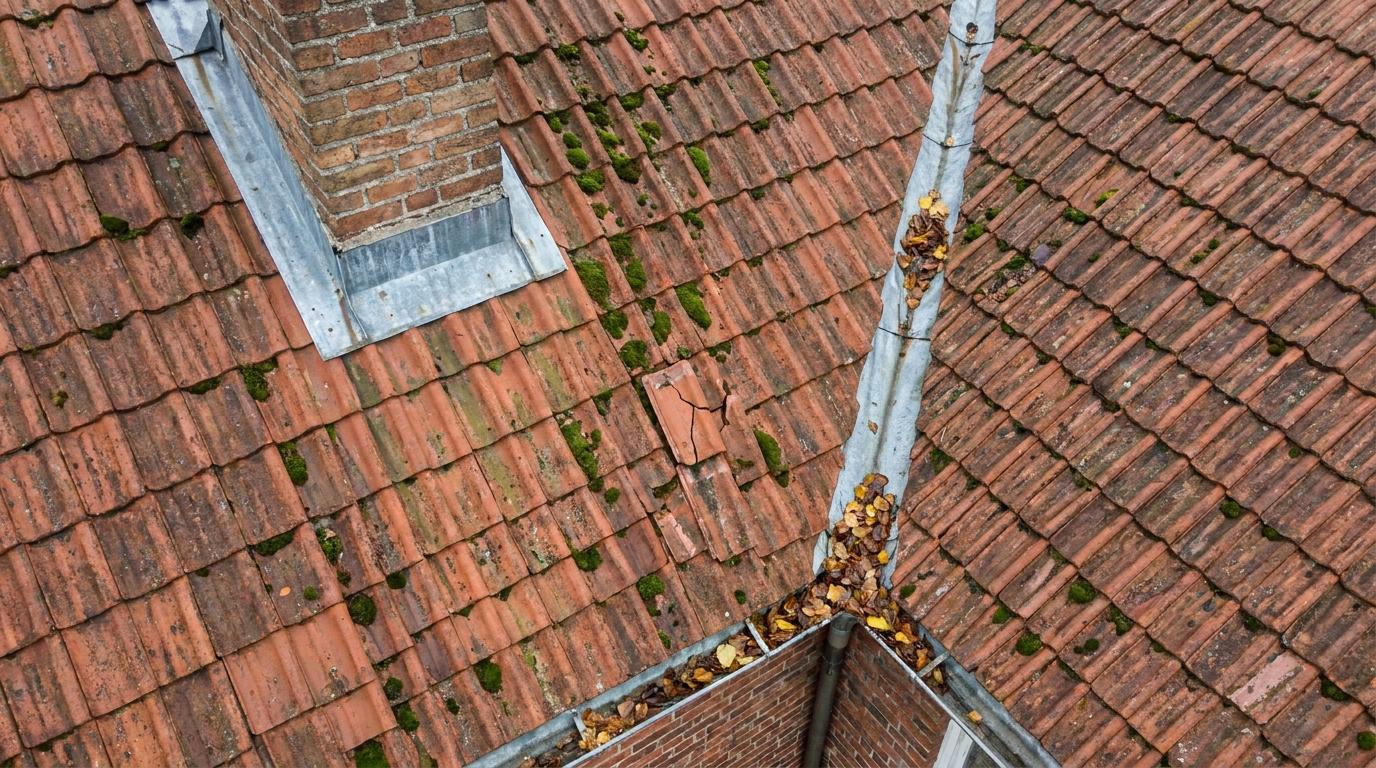
Drönarbild snett ovanifrån av ett rött tegeltak med mossa, en sprucken takpanna, en murad skorsten med plåtbeslag och en ränndal full av höstlöv

The roof is the part of a building that takes the most wear and gets seen the least. Getting up there takes a ladder, a lift or scaffolding, which is why it often does not happen until something leaks. A drone takes the pictures from the air, without anyone having to set foot on the roof.

We are photographers, not surveyors. What you get is images that show what the roof and façade look like right now — sharp enough for a roofer, a sheet-metal worker or a building surveyor to assess at a desk. The assessment belongs to the person with the trade.
What you can see from the air

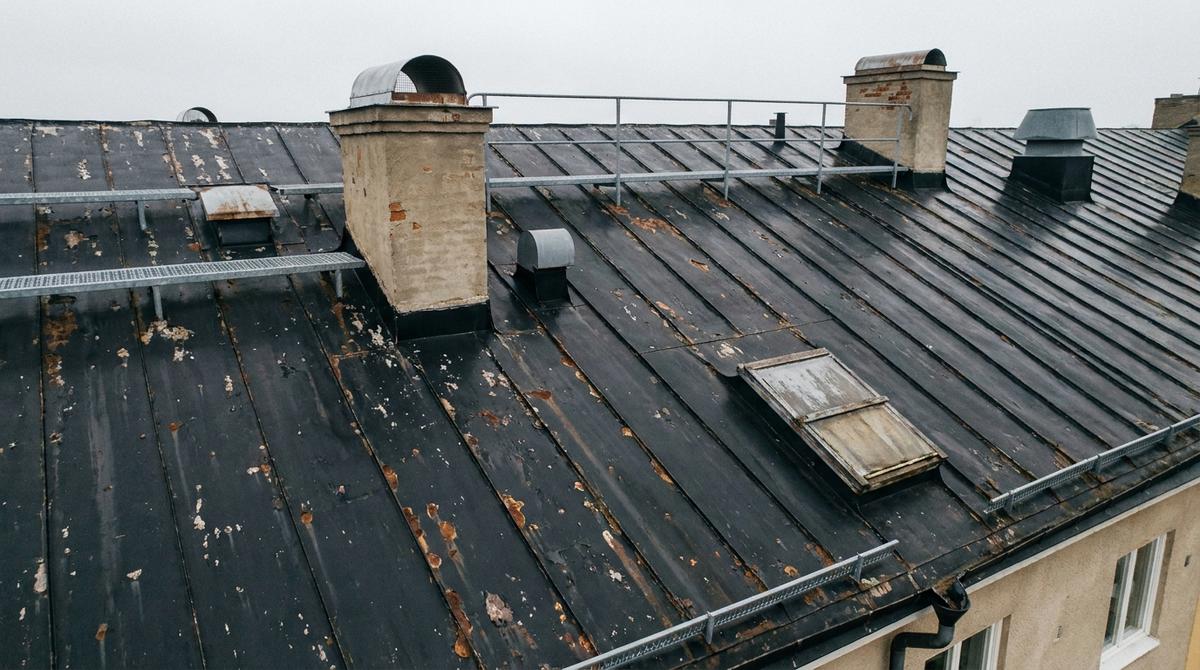
Drönarbild på nära håll av ett svart falsat plåttak med färgsläpp och rostfläckar, två putsade skorstenar med plåthuvar, ventilationshuvar, taklucka, takbrygga och snörasskydd längs takfoten
  • Tiles and roof covering. Cracked, displaced or missing tiles, moss and growth, blisters and lifted seams in felt and membrane.
  • Sheet metal. Rust, dents and flaking paint on metal roofs, and the flashing around chimneys, roof windows and vent hoods — where leaks often start.
  • Chimneys. Cracks in render and brickwork, damage to the crown and the cap.
  • Drainage. Gutters full of leaves, downpipes that have come loose, standing water on flat roofs and blocked roof drains.
  • What sits on the roof. Solar panels, roof hatches, snow guards, roof walkways and their fixings.
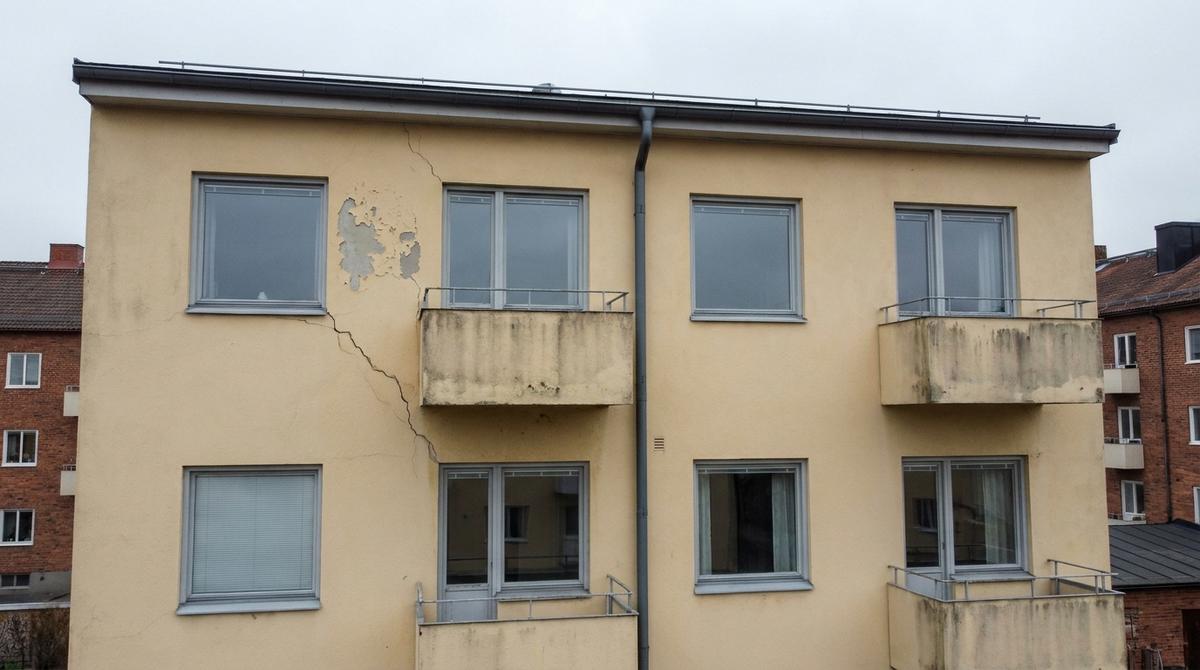
  • The façade. Cracks in render, flaking paint, joints, window sills and the undersides of balconies — surfaces that from the ground can only be seen through binoculars.

What you cannot see

An image shows the surface. The underlay, the battens, moisture in the structure and the state of the attic are not visible from the air, and a tile that looks whole can be loose. If the images find something that needs to be touched, measured or repaired, someone still has to go up — but then you know where, and can book the right tradesperson and the right lift from the start.

So the images do not replace a survey. They give the surveyor something to start from, and they show when it is time to call one in.

When it is worth flying

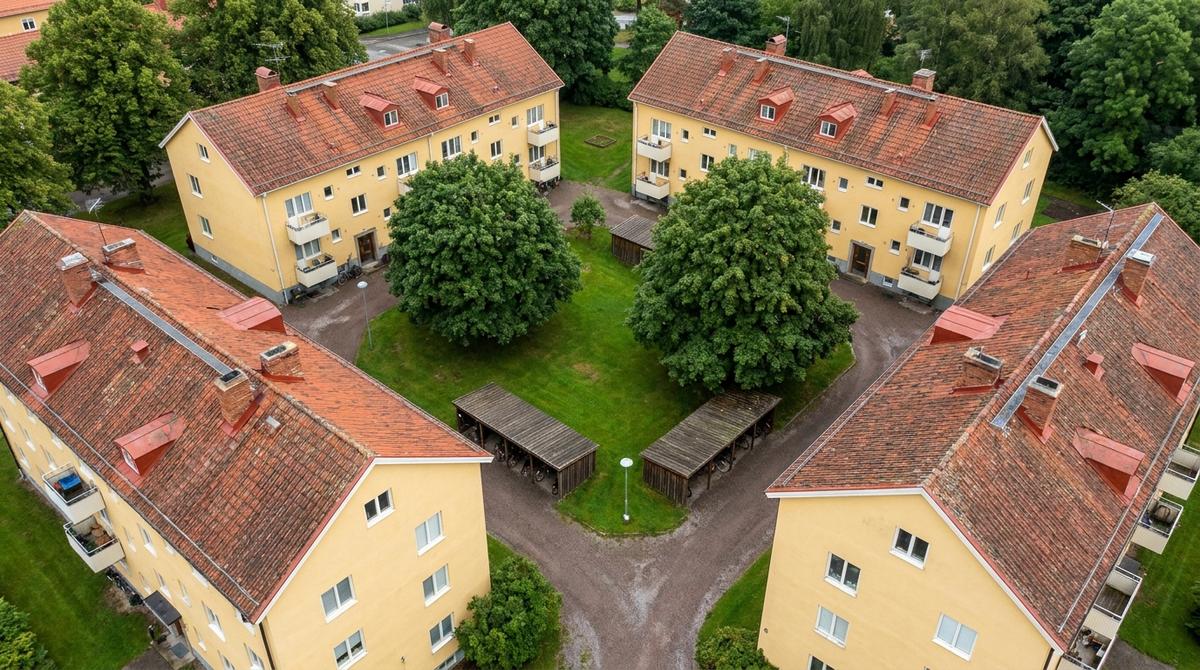
Flygbild av en grupp gulputsade flerbostadshus i tre våningar med röda tegeltak kring en grön gård med stora träd och cykelskjul
  • Before a renovation or a tender. When every bidder gets the same images they price the same roof, and the quotes can be compared.
  • For the maintenance plan. A housing association that photographs its roofs every few years sees what is changing instead of guessing.
  • After a storm or heavy snow. A check of tiles, metal and gutters, and images for the insurer if something has happened.
  • Before the warranty runs out. Document the contractor’s work while a claim can still be made.
  • When buying a house. In a pre-purchase survey the roof is often assessed from the ground or from a ladder when it cannot be walked on safely. Aerial images fill that gap.

How the images are delivered

Drönarbild rakt mot en gulputsad fasad i höjd med övervåningen: en spricka i putsen som löper snett nedåt, färg som flagnat under takfoten, betongbalkonger med smutsränder och ett stuprör

We photograph systematically: first overviews of each roof slope, then close-ups along the ridge, the eaves, the penetrations and the gutters, and finally the façades one side at a time. You get the images at full resolution, sorted by roof slope and façade, and dated.

If you want something looked at in particular — a chimney, a leak that shows indoors, a certain balcony — say so beforehand and we spend the time there.

Keep the images. A dated set of pictures is the only way to show afterwards what the roof looked like before the storm, before the contract or before the purchase.

Before the flight

The flight needs dry weather and moderate wind. The light should ideally be even — an overcast day gives fewer hard shadows and is often better for inspection than sunshine.

In apartment buildings it helps if the residents know about the flight in advance; a note in the stairwell is enough. The camera points at the roof and façade, not in through windows, and images where people happened to be caught are removed before delivery.

We check which rules apply to the airspace at the address before we book a time. Get in touch with the address and what you want looked at, and we reply within 48 hours.

01 / 04

Discover

We learn the business, map stakeholders and identify where the real value actually lives.

02 / 04

Define

Concrete scope, decision points and a plan you can take to the board.

03 / 04

Build

Short sprints, continuous demo, incremental release. No 6-month waterfalls.

04 / 04

Operate

We help hand it back to your team, or stay on as a managed-operations partner.

Got a problem worth solving?

Contact us →