Euroflorist Sweden is part of Euroflorist Group — one of the world's leading flower delivery companies, with a network of over 50,000 partnering local flower shops. Through the network, customers can order flowers for delivery to recipients in a large number of towns and markets, while the bouquet itself is created and delivered by a local florist.
Euroflorist was founded in Malmö in 1982 by the Swedish entrepreneurs Peter Jungbeck and Lars Hedberg, then under the name Svensk Blomsterförmedling. The business idea was that affiliated florists could cooperate and relay flower orders to one another. That made it possible for a customer to order flowers in one town and have them delivered by a local flower shop elsewhere in the country. Over time the original idea grew into an international business with an extensive network of florists and digital sales channels.
I joined as a technical consultant in Euroflorist's initiative to develop the company's blogs and create a clearer link between inspiring content and e-commerce. The blogs were built in WordPress, while products, prices and offers were managed in the underlying commerce platform. The assignment was therefore about tying two separate technical environments together into one coherent customer experience.
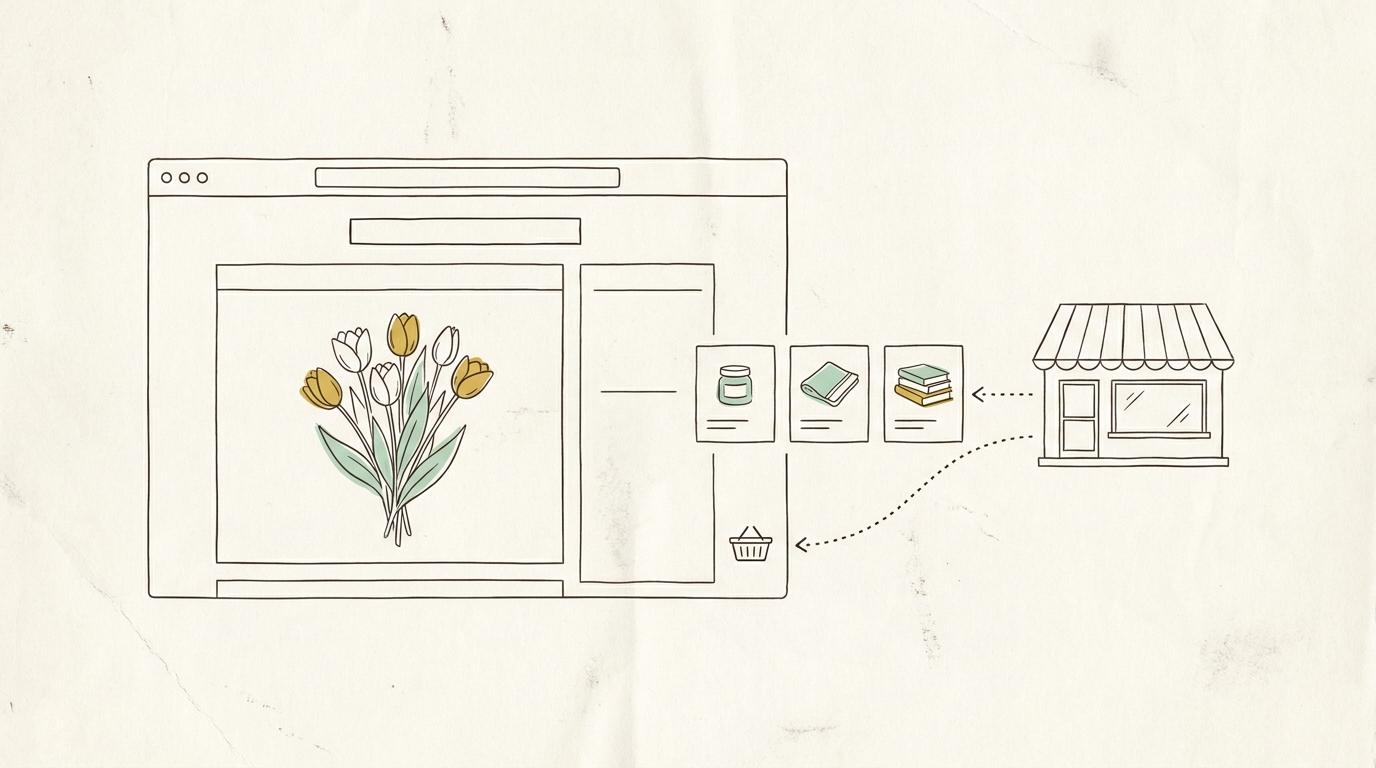
I developed reusable widgets that fetched current content and product information from the e-commerce platform and presented it directly on the blog pages. That made it possible to place relevant products and offers alongside editorial content about, for example, holidays, gifts and different types of flowers. Visitors could thus go from inspiration to a concrete product offer and on to purchase without the experience feeling split between blog and web shop.
As part of the solution I also built a carousel component in JavaScript that automatically fetched and displayed the day's current offers. The component was designed to be reused across different parts of the website and updated with information from the commerce platform. When the offers changed, the right content could be shown without the editorial team having to update every blog page by hand.
The technical solution let Euroflorist's editors keep working in WordPress, while commercial content could be pulled from the system where products and offers were already administered. That reduced duplicated work and made it easier to keep information current and consistent.
The solution was rolled out across eight European markets. That required the components to be reusable and to work with different languages, local content and market-specific offers. With a shared technical foundation, Euroflorist could create a more uniform experience across several markets, while each market could adapt its content to the local audience.
The result was a clearer bridge between inspiration and sales. The blog no longer served merely as an editorial channel, but became an integrated part of the customer journey, where relevant content could lead the visitor from reading to product selection and a completed purchase.